FindStayAI: an AI Accommodation Search for the Croatian Coast in Five Languages

FindStayAI is an accommodation search for the Croatian coast where you don't click through filters, you write a sentence. A traveller types something like "an apartment in Makarska for four, 10 to 17 July, close to the beach with parking", in any language, and the AI turns it into a search and returns the stays that fit. My brother Zvonimir and I started the project in September 2026. The idea was his; the design, the build and all of the technical side were mine. The homepage went live the same day the domain was registered, the AI search a day later, and within three weeks the site had grown to about 390 pages in five languages.
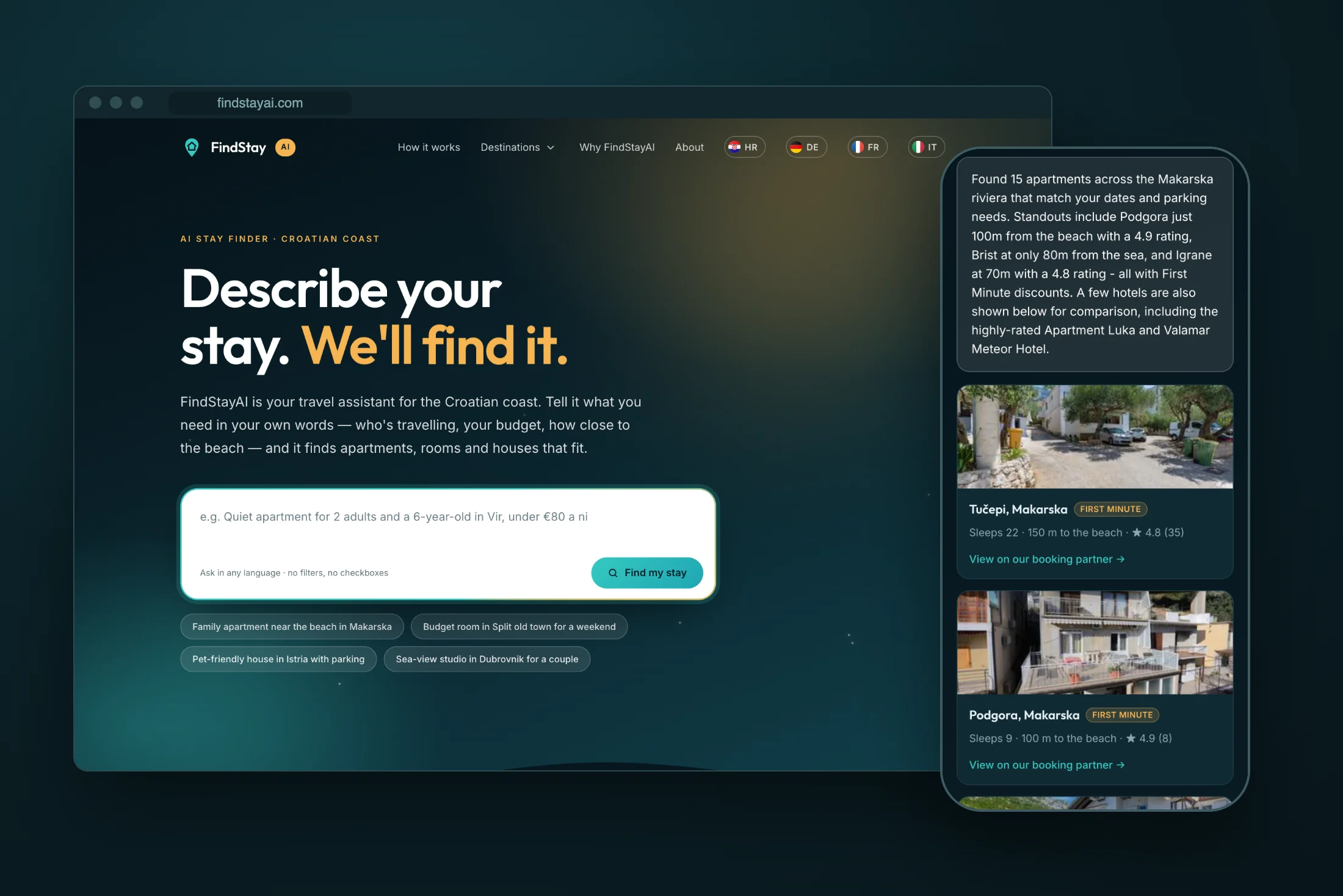
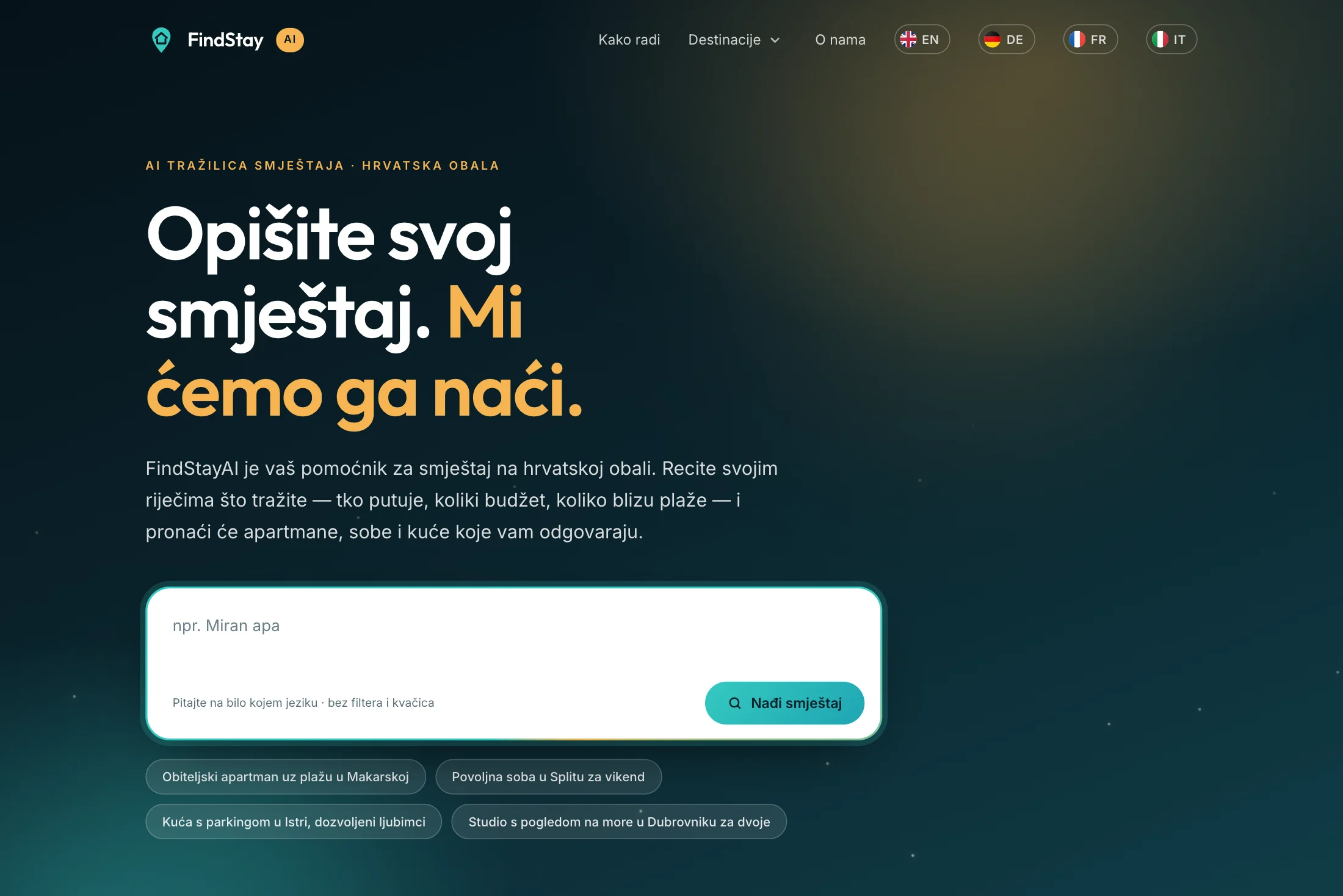
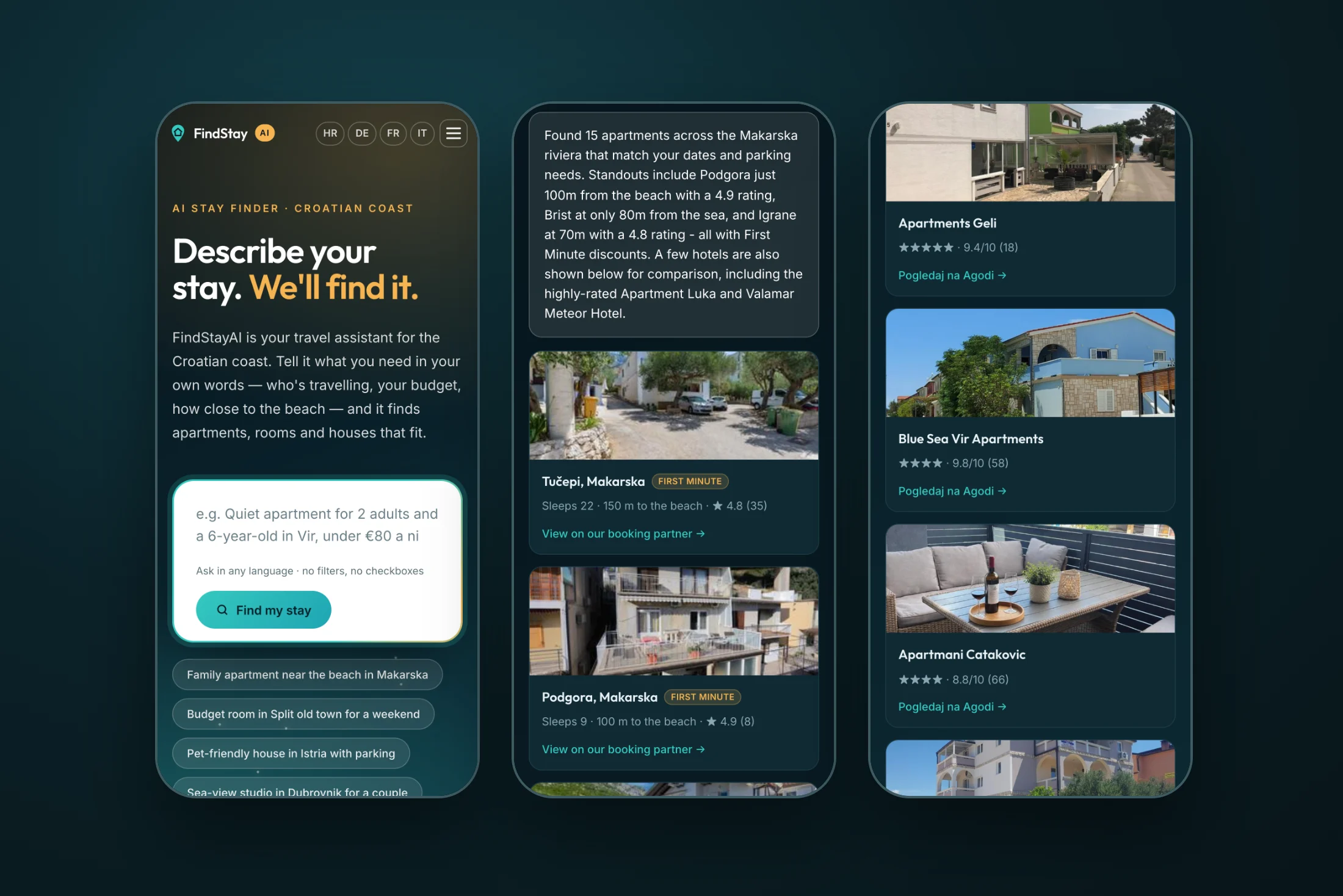
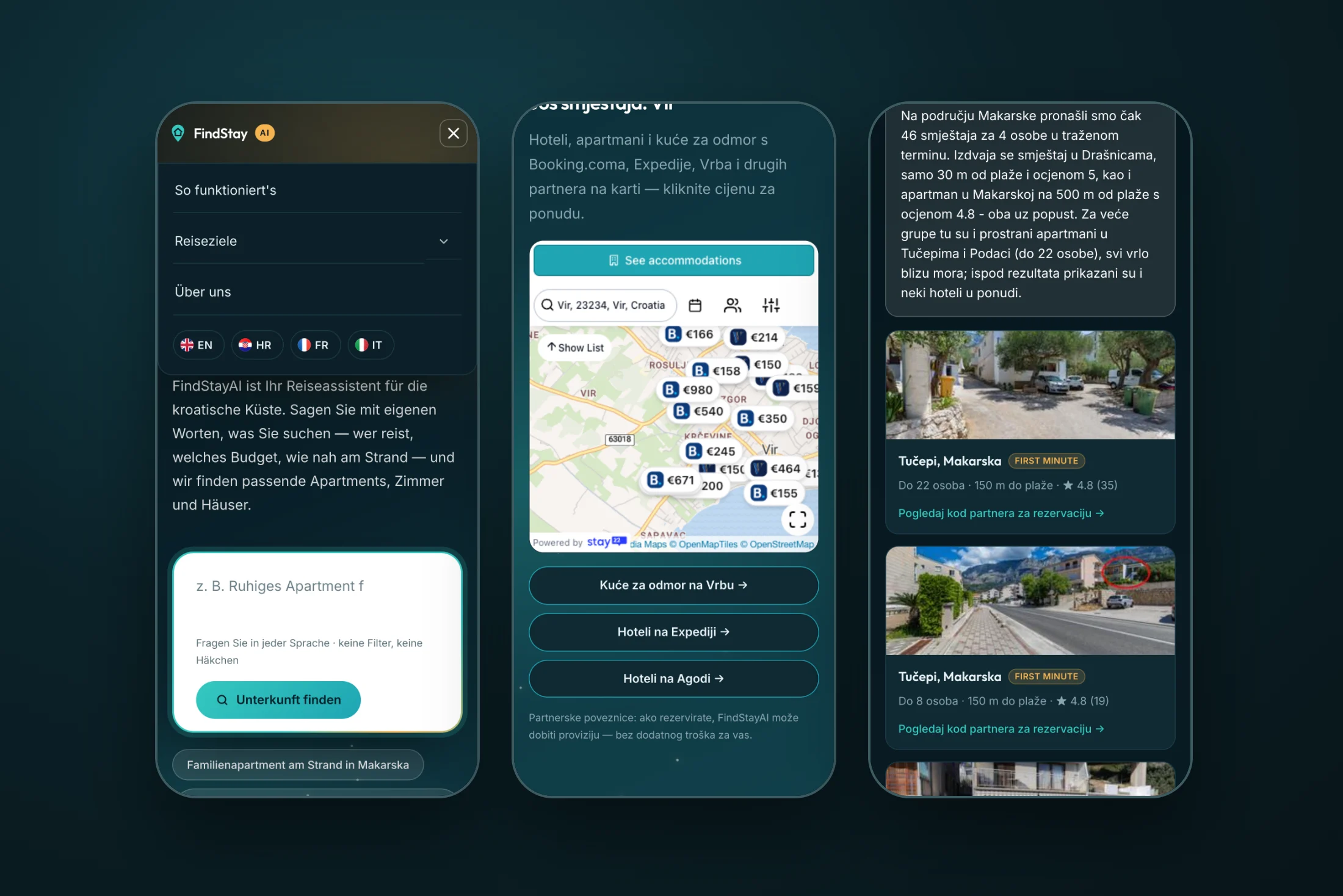
I called the visual identity Adriatic Night: a dark blue-green background, the turquoise of the sea and the orange of a sunset. The logo is a location pin with a small house inside, with an orange AI badge next to the name. The homepage has one message and one field: "Describe your stay. We'll find it." The input is deliberately white with a turquoise glow, because in the first test people pressed the button without typing anything. Example requests type themselves out inside the field, and ready-made requests sit below it, so it is clear straight away how to ask.
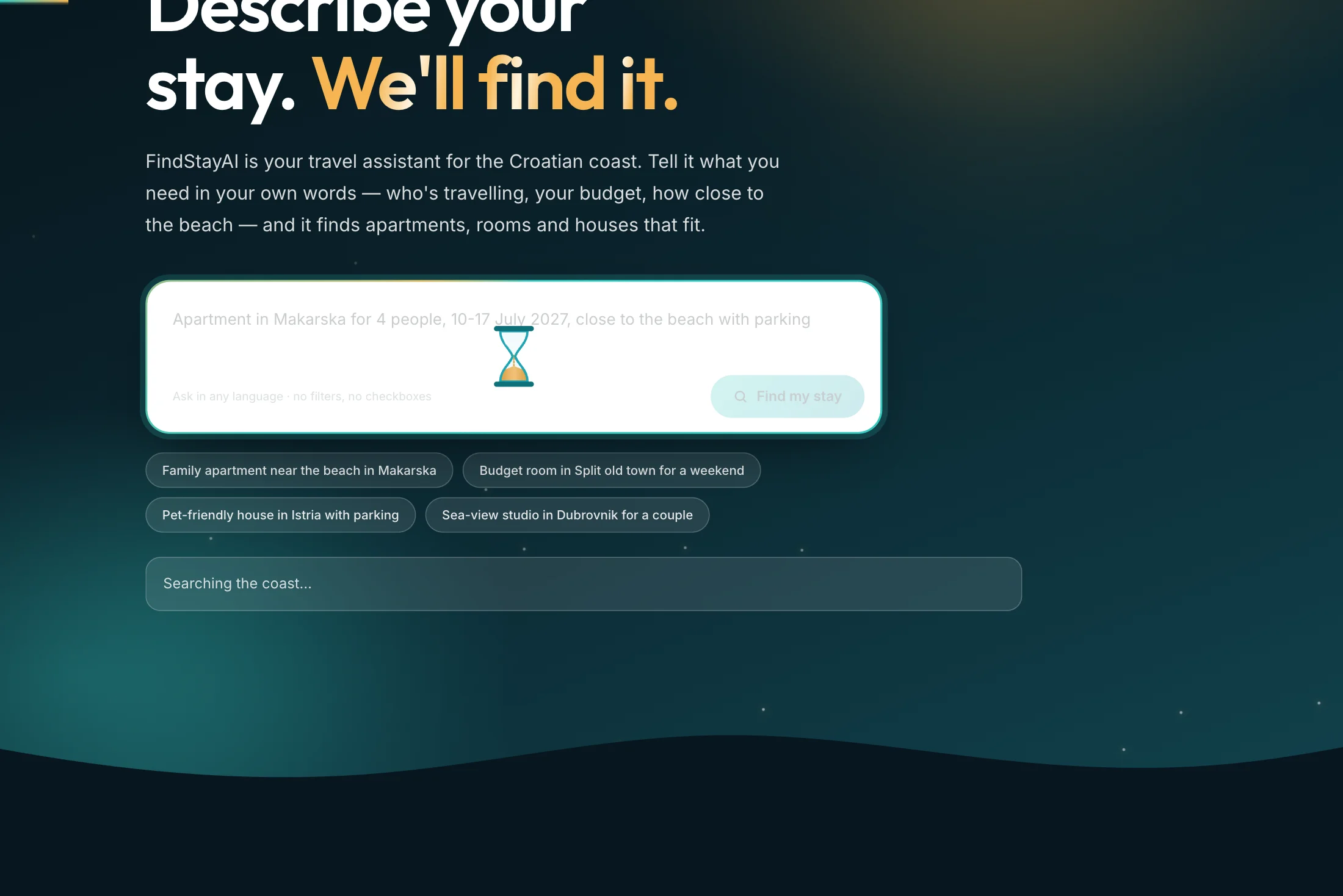
When a traveller sends a request, Claude (Anthropic) turns it into concrete criteria: place, dates, number of guests, budget per night, distance to the beach, type of beach, pool, pets, parking, sea view or a quiet location. Phrases like "in July" or "for the weekend" become dates. If something essential is missing, usually the dates, it asks one short question instead of guessing. Those criteria drive the search across our partners, and the AI then writes two or three sentences about what it found, in the language the traveller used. While it searches, an hourglass turns in the field, with sand that actually runs and a glass that flips when it empties.
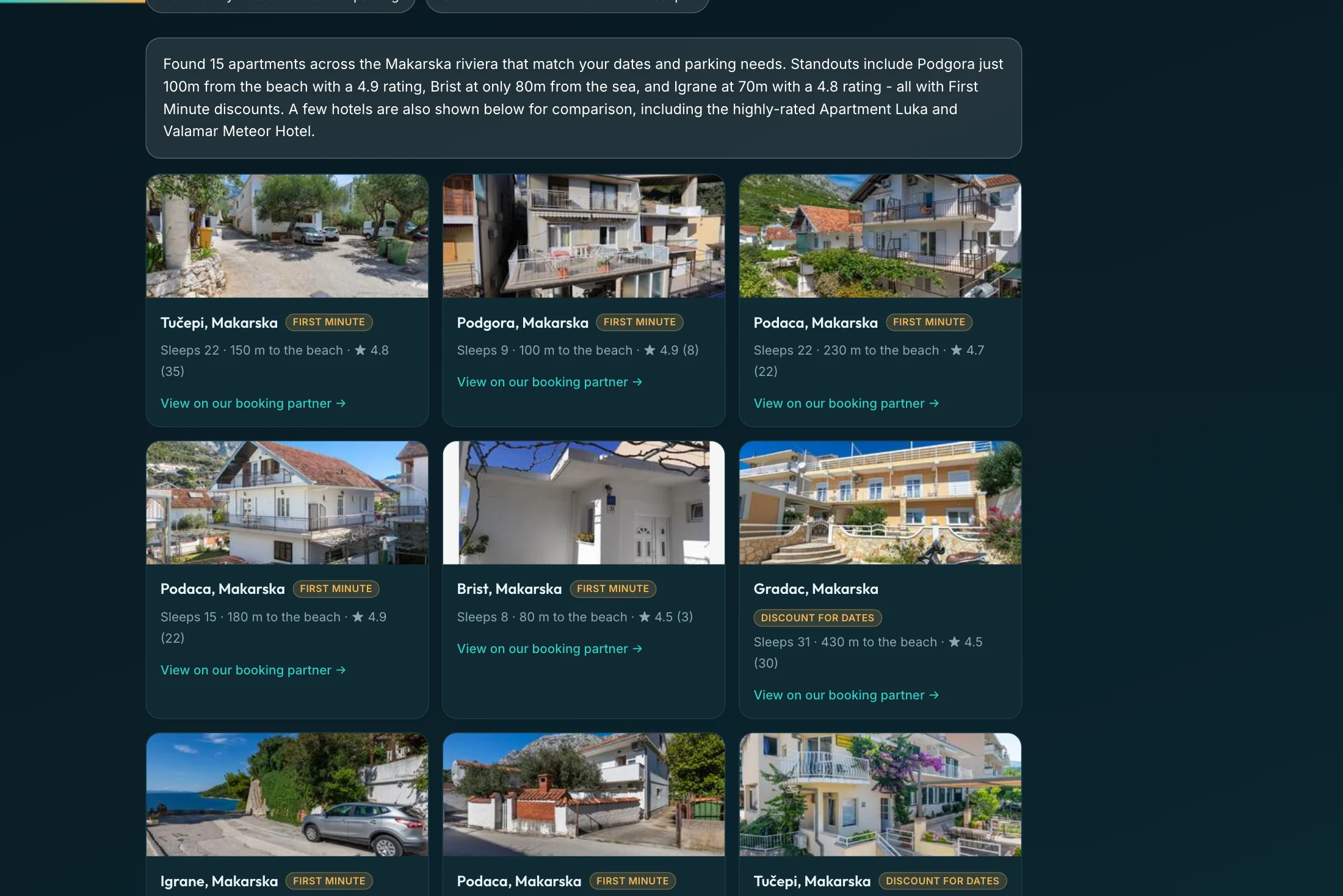
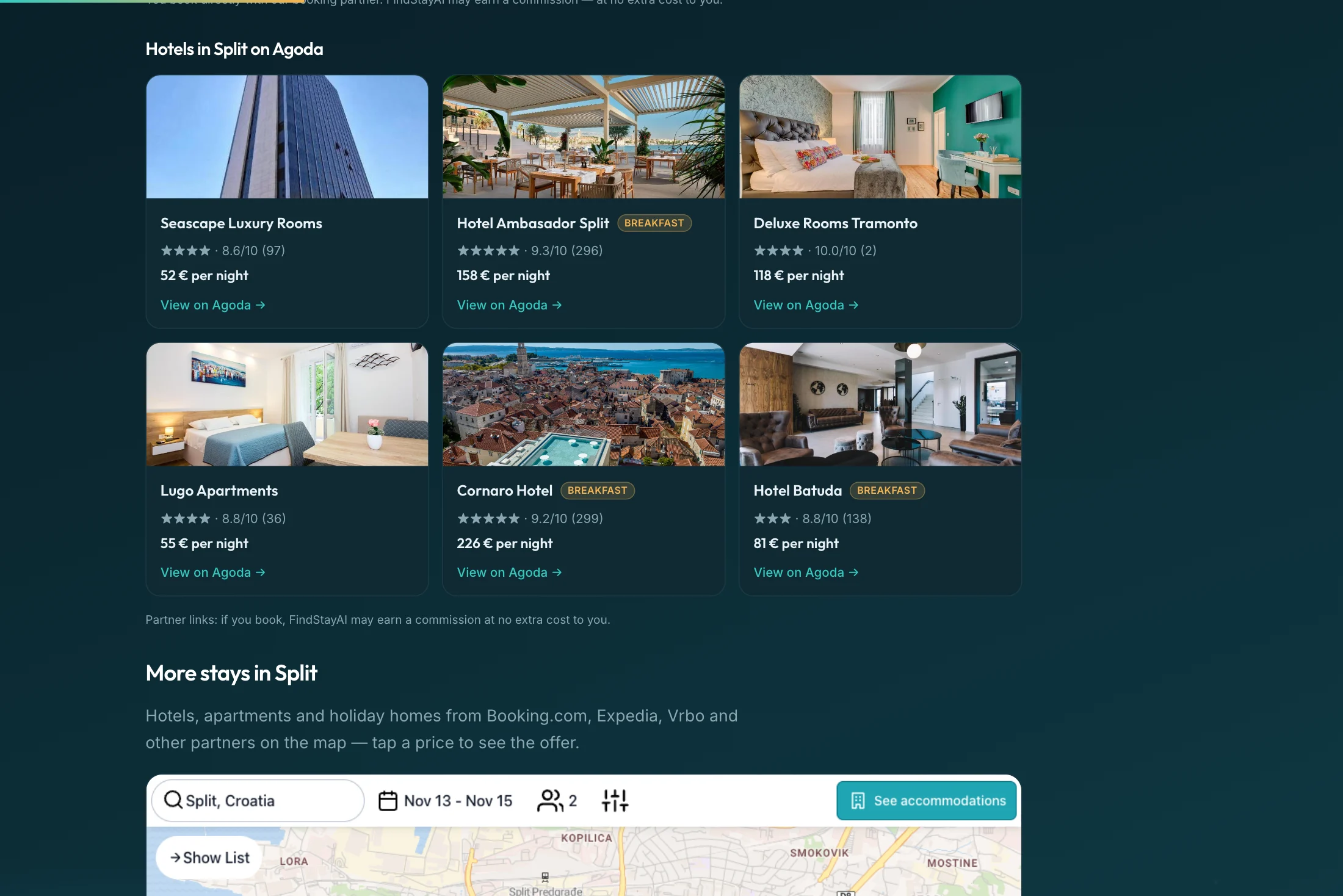
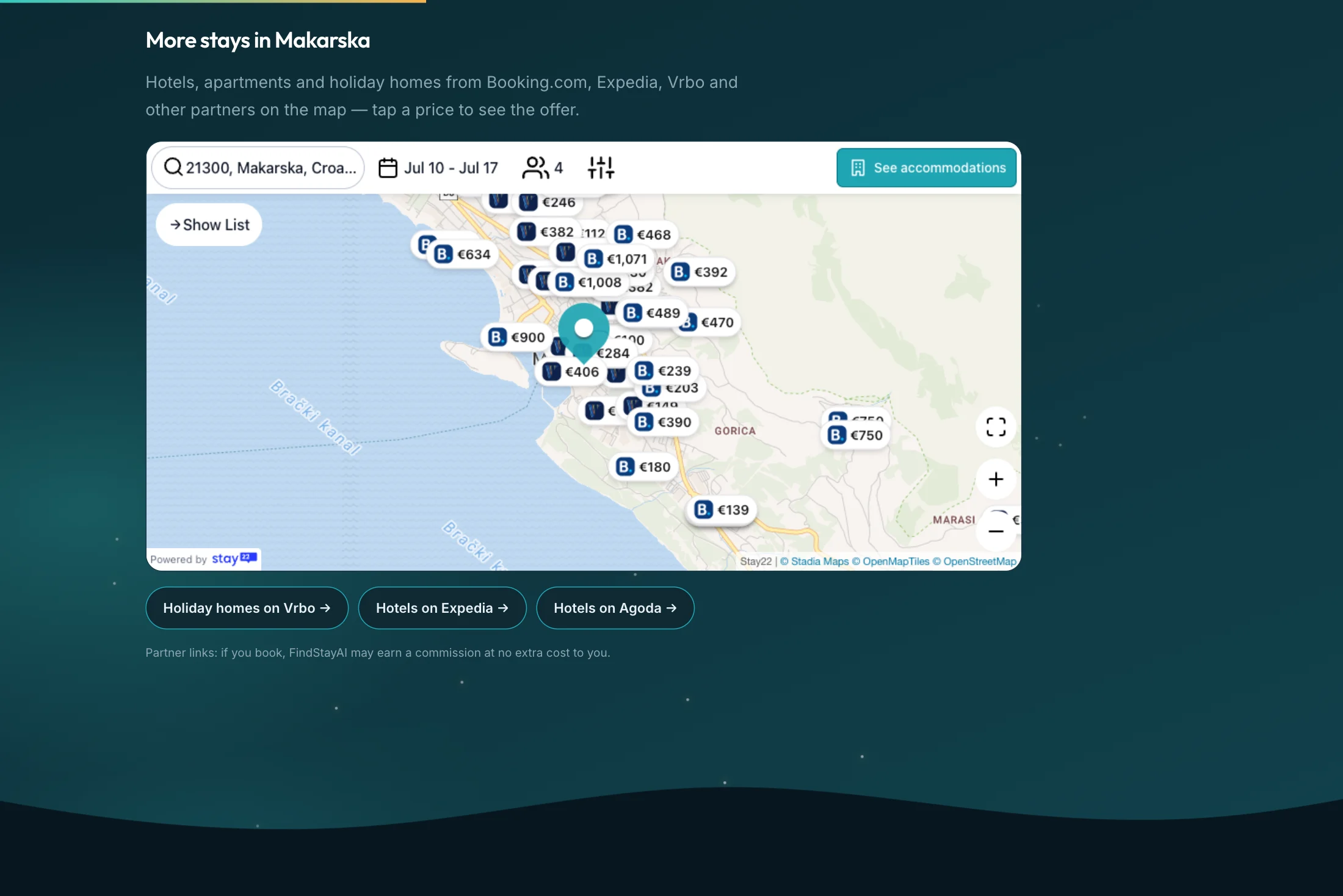
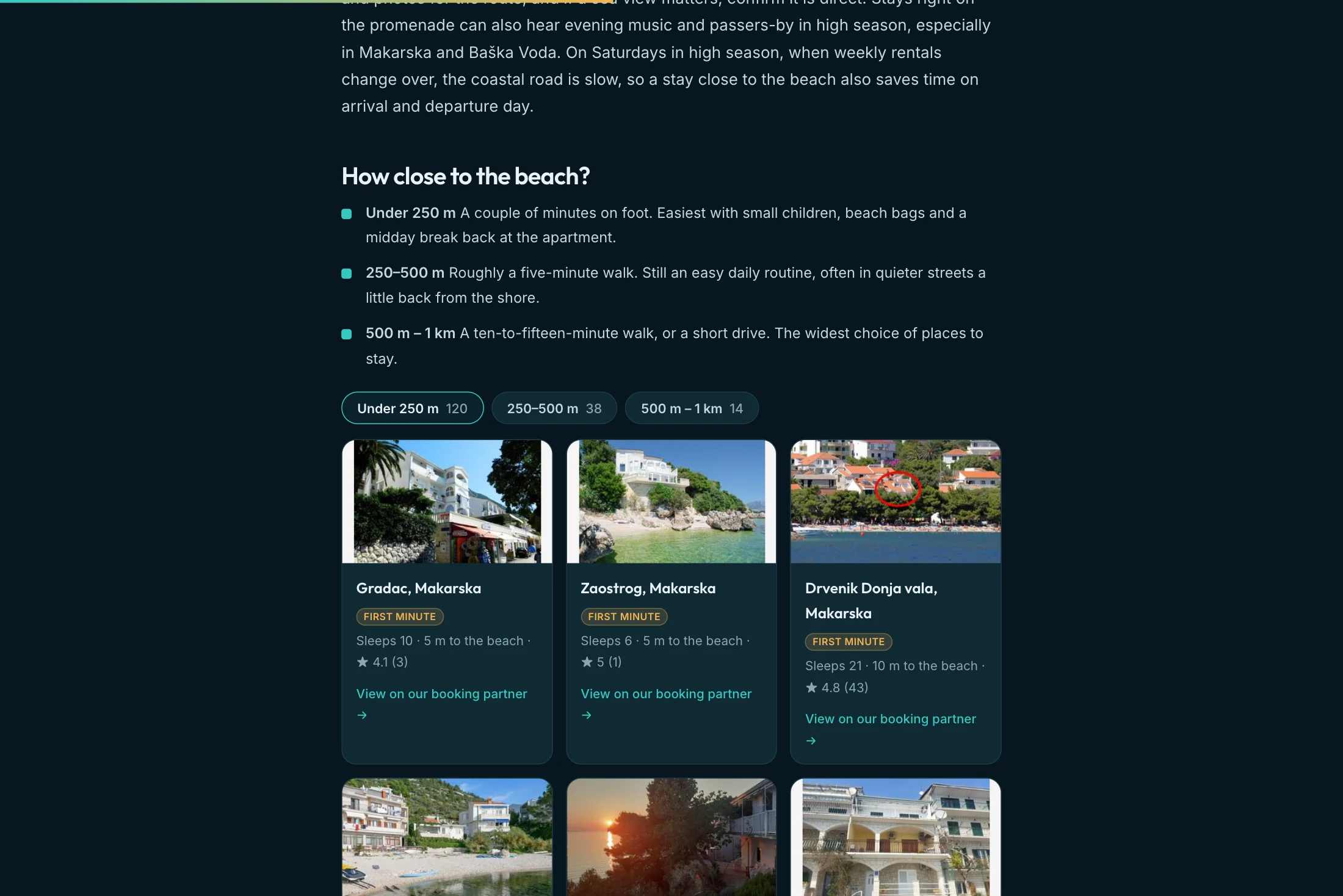
Results come from several sources, each in its own format. Private accommodation from Adriatic.hr appears as cards with a photo, the place, how many it sleeps, the distance to the beach, the rating and discount labels such as First Minute. Below them are hotels from Agoda, with stars, guest rating, price per night and a breakfast label. When Agoda has no prices yet for the requested dates, the hotels are still shown, with a short note. Then comes a Stay22 map with offers from Booking.com, Expedia and Vrbo for the same place and dates, plus buttons that go straight to Vrbo, Expedia and Agoda. The traveller books with the partner, and FindStayAI earns a commission at no extra cost to them.
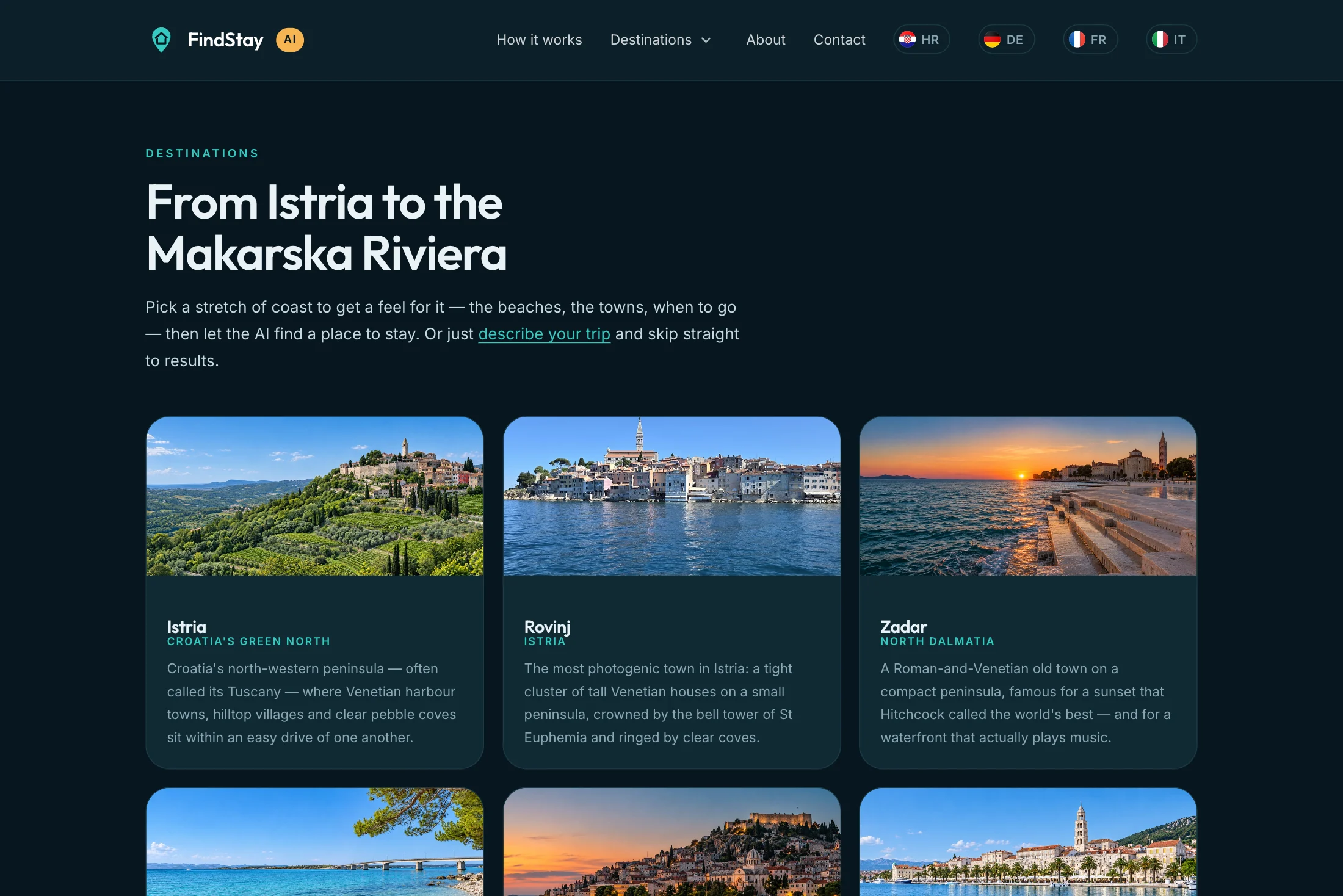
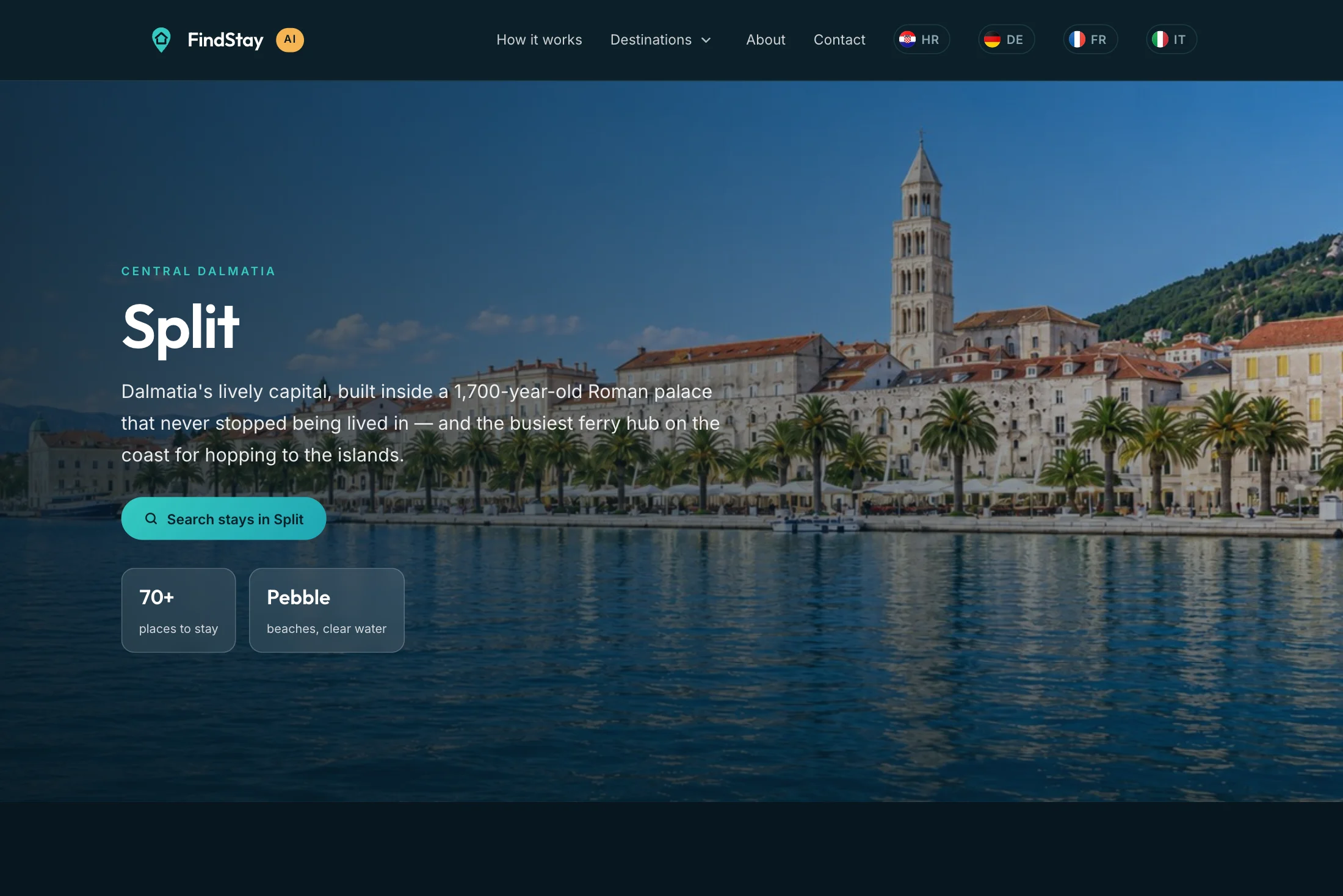
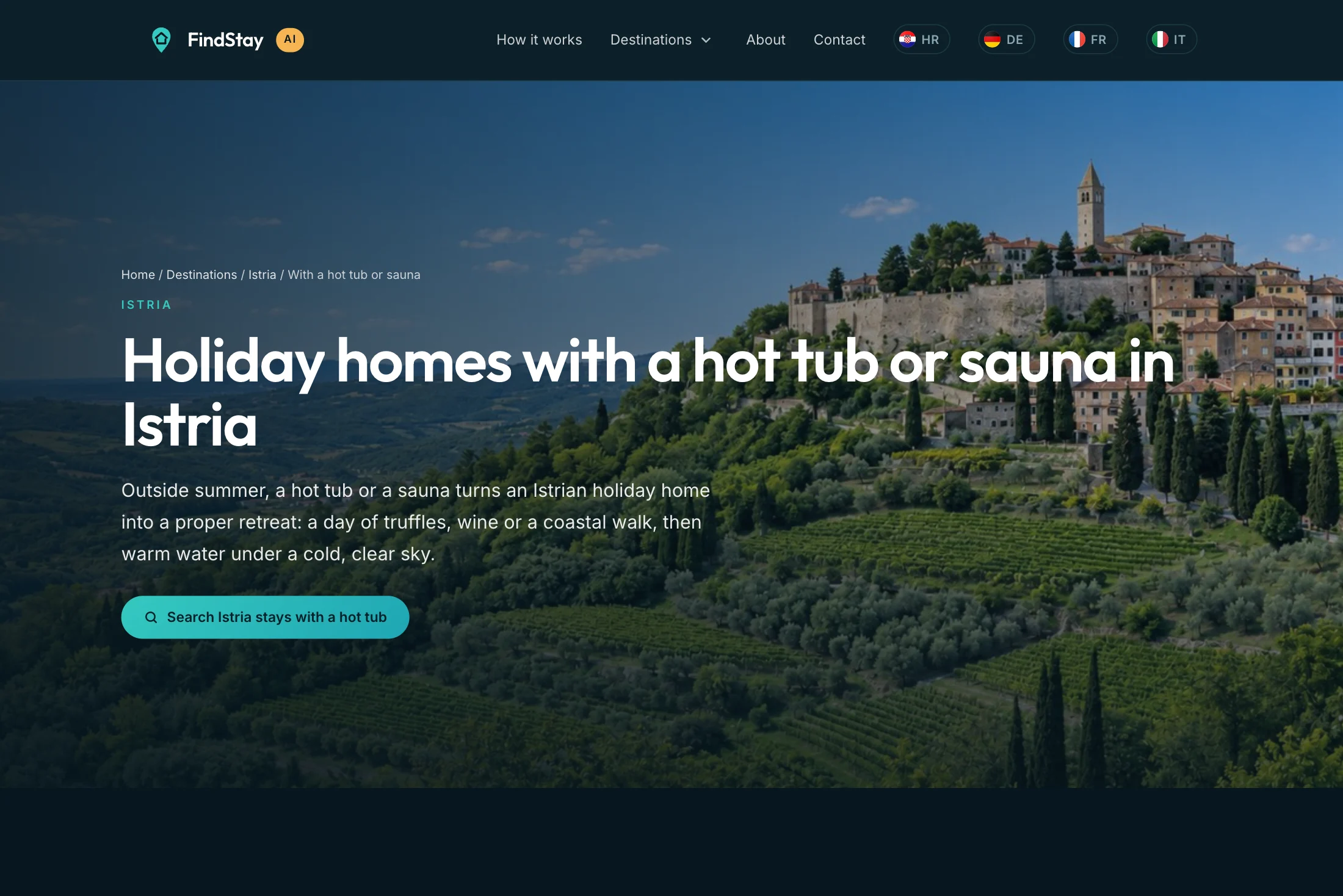
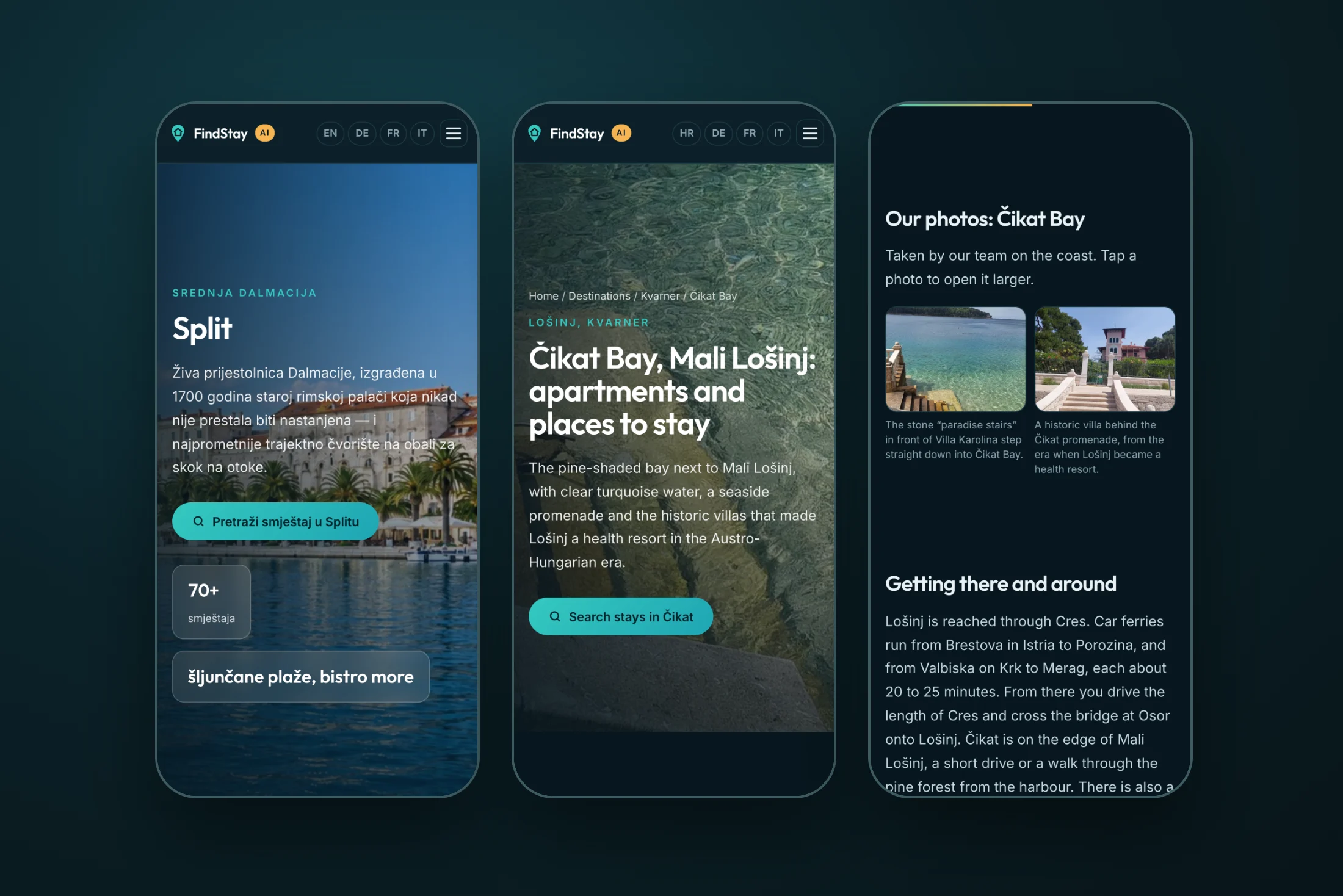
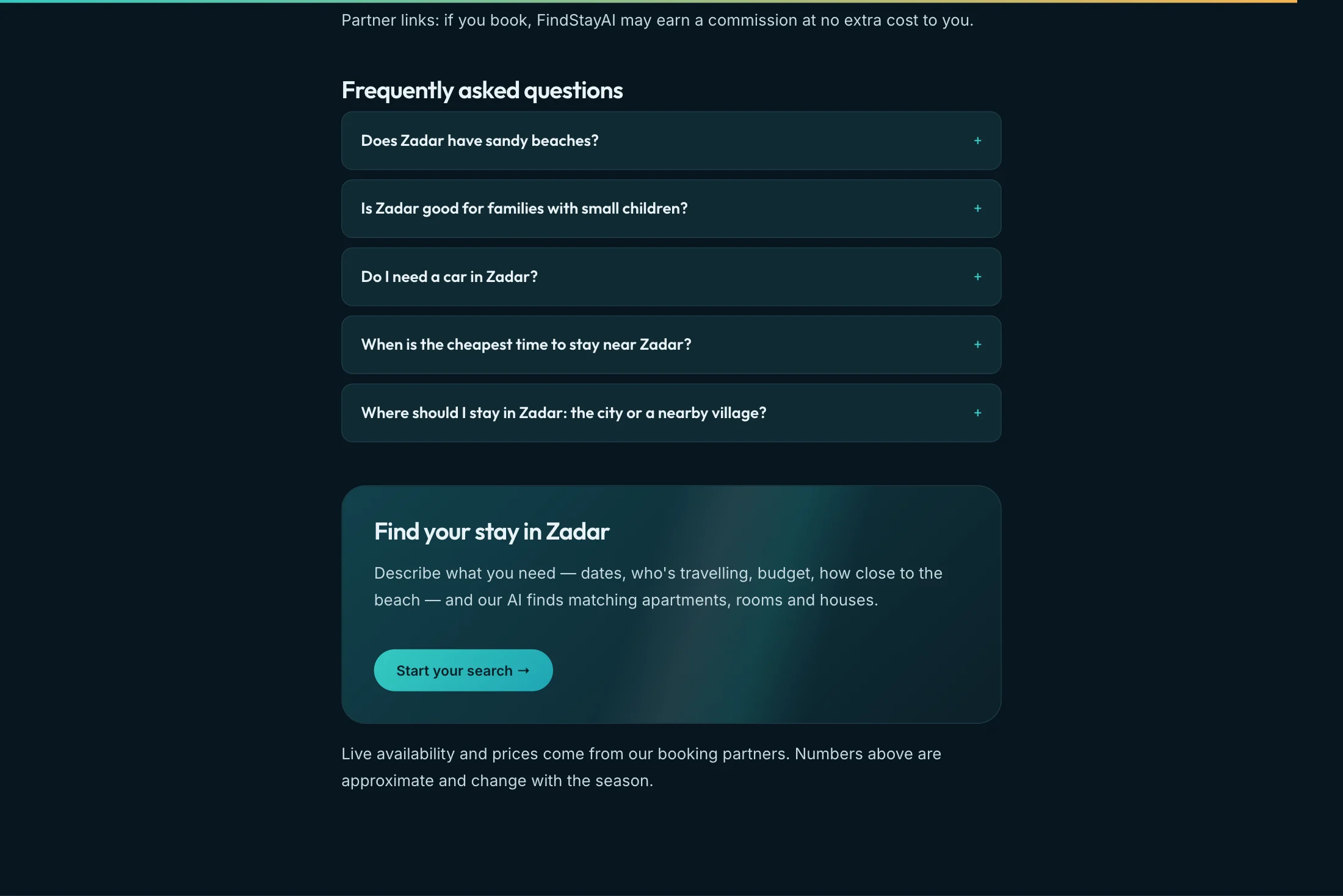
Alongside the search, the site has travel guides. Nine main destinations, from Istria and Kvarner to the Makarska Riviera and Dubrovnik, have in-depth pages: where to stay by part of town or riviera, which beaches are worth it, how to get there, when to go, what is good to know and the most common questions. Next to them are 31 smaller places, from Čikat and Nin to Podstrana and Vis. Each part of a page has a button that opens the AI search for that area, a live list of available stays sits at the bottom, and where there are any, current hotel deals from Megabon appear too.
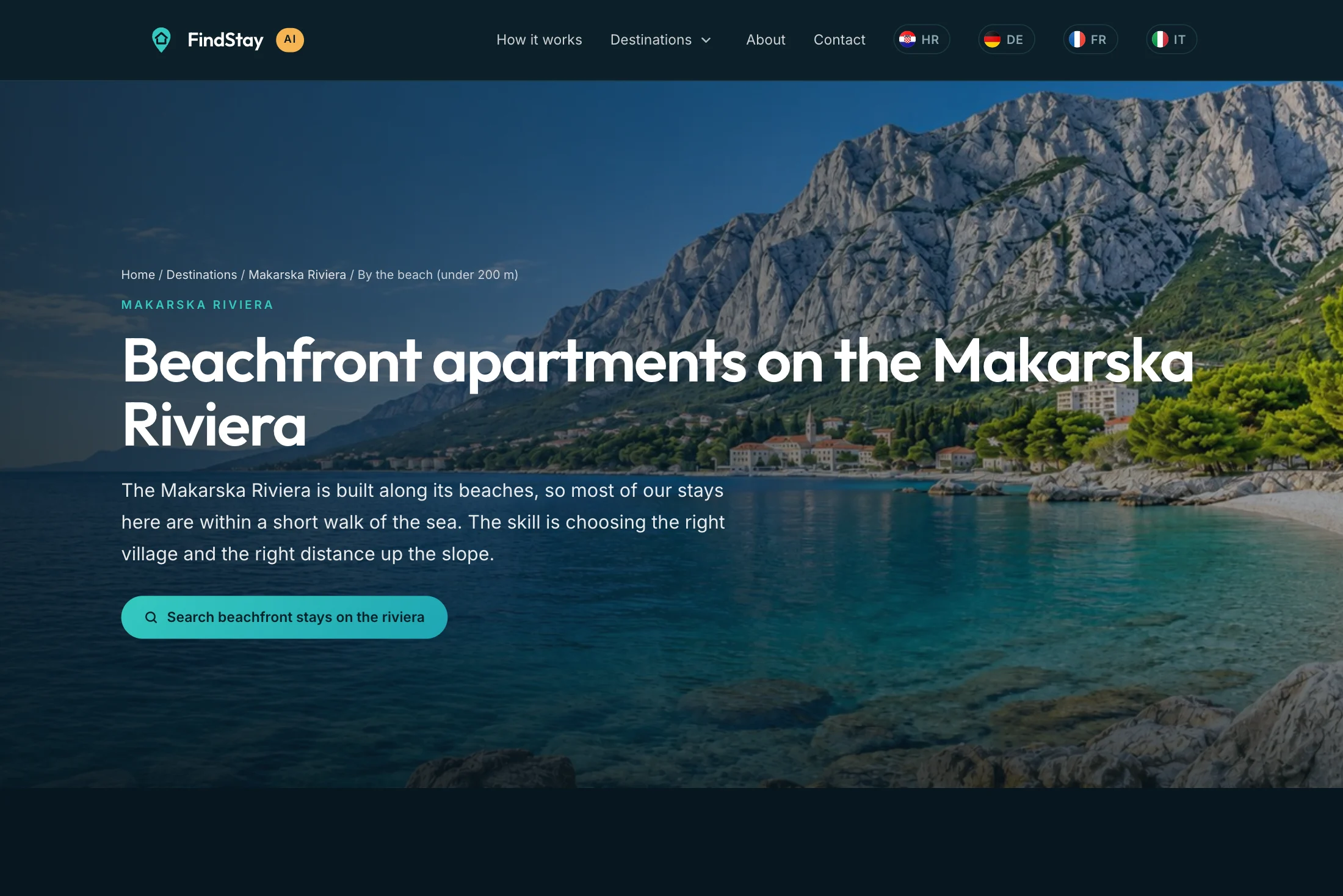
For the searches people actually type into Google, I built dedicated pages: beachfront stays, stays with a pool, pet-friendly stays, stays near sandy beaches and family stays. The beachfront pages have tabs by distance from the sea, under 250 metres, 250 to 500 metres and up to a kilometre, with the number of offers in each. For winter there are pages with holiday homes that have a hot tub, sauna or heated pool in Istria and Kvarner. The partner catalogue cannot filter by that equipment, so I wrote a script that checks the amenities of around a thousand houses and picks out the ones that really have them.
The whole site exists in English, Croatian, German, French and Italian, with translated addresses: /hr/destinacije/, /de/reiseziele/, /fr/destinations/, /it/destinazioni/. The Croatian texts decline place names correctly, so they read naturally rather than like a template. Every page has correct hreflang links to the other languages, the sitemap holds about 390 addresses, and there is an llms.txt to help AI search engines understand the site.
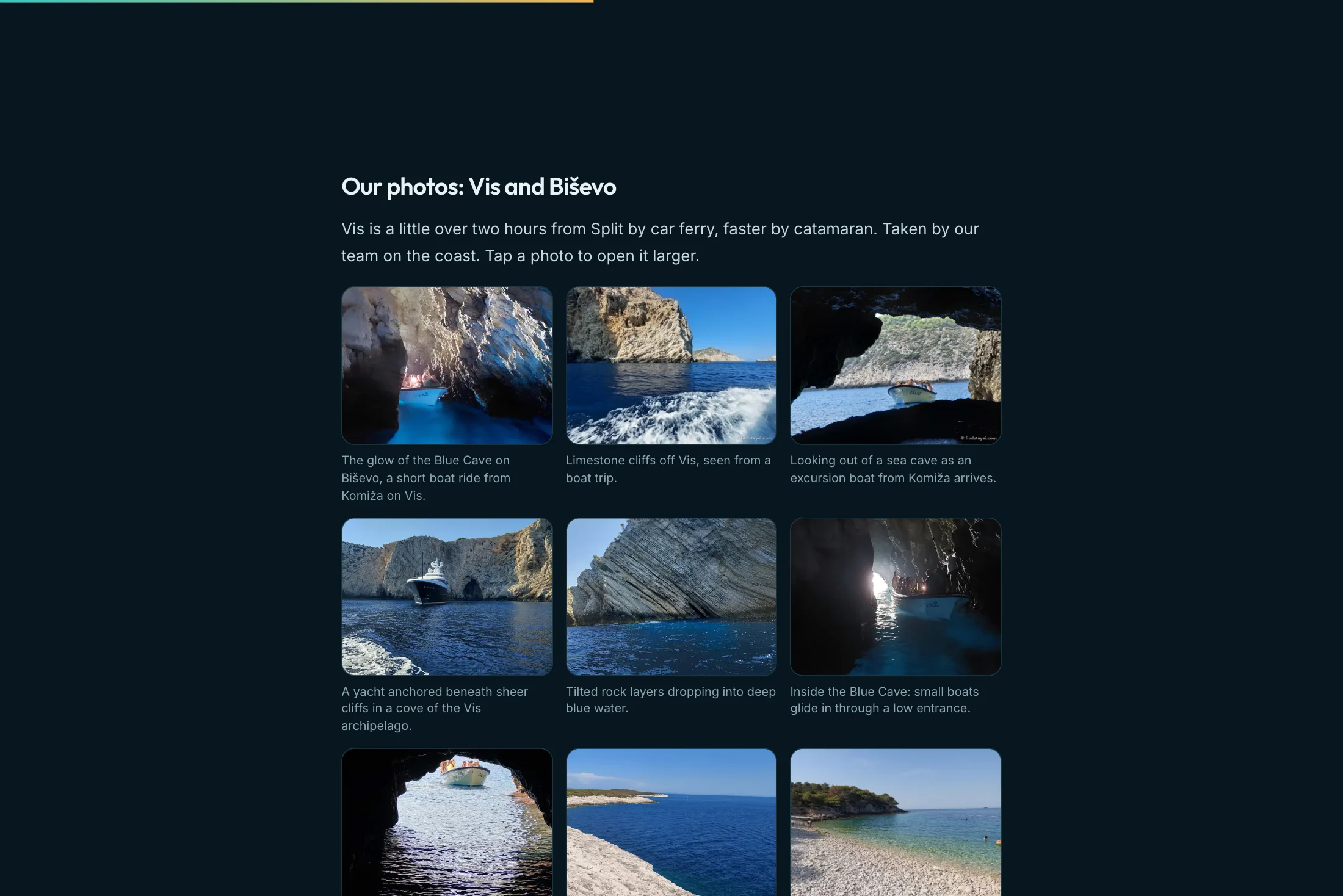
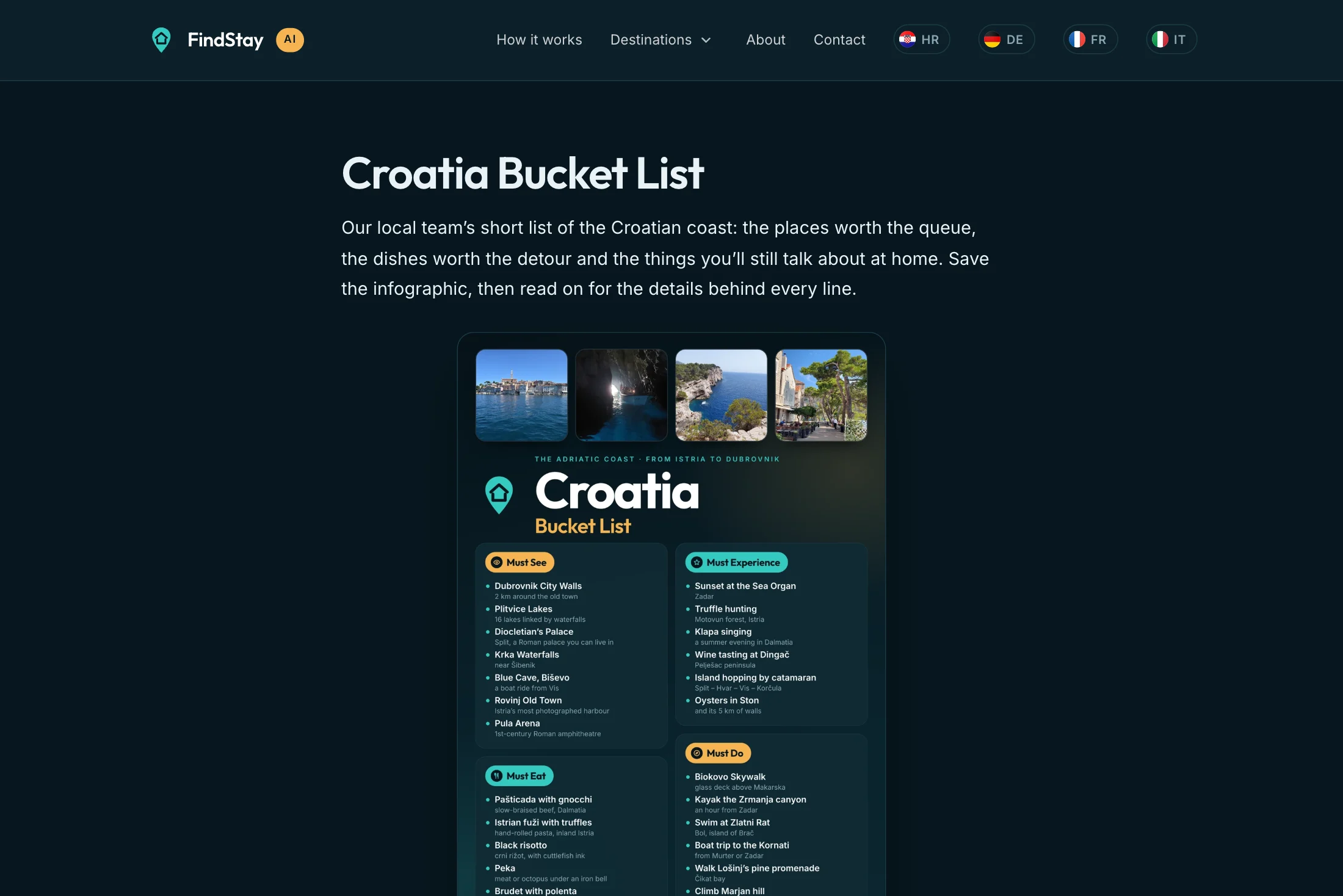
Some of the photos on the destination pages are our own, from Vis, Biševo, Dugi Otok, Selce and Čikat. Each carries a discreet watermark and a caption in five languages, and opens full size on a click. For Pinterest and social media I designed infographics in the same style: a Croatia Bucket List, the must-visit places on the coast and the national parks. Each has its own page with text and a button to download it in high resolution.
Part of the work does not show up in any screenshot. The same search on the same day does not use the AI again; the answer comes from a cache, which keeps costs low. If Anthropic does not respond, a second AI provider takes over and the traveller never notices. Clicks to partners are counted anonymously, without cookies and without IP addresses, and Google Analytics only runs once a visitor agrees. Every morning at eight the two of us get an email report: clicks per partner, the most visited pages, visitors' languages and the bookings that Stay22 and Megabon report through their APIs.
FindStayAI brings together what I do every day, web design and development, with AI that actually does the work for the user. Instead of ten filters, the traveller writes one sentence, and the site answers like someone who knows the coast.
Technologies: The site is hand-written HTML, CSS and JavaScript with no framework, set in Outfit and Inter. The pages in five languages are built by a custom Python generator from content stored as JSON. The backend is PHP, which keeps the API keys private and caches answers. The AI side runs on the Claude API (Anthropic) with tool use, with OpenAI as a fallback. Offers come through the Adriatic.hr XML API, the Agoda Affiliate API, the Stay22 map and CJ (Megabon). There is also structured data (FAQPage JSON-LD), hreflang on every page, llms.txt, an SVG hourglass animation and a daily report written in Python.